Melbourne is putting its biomedical and health innovation ecosystem on display as delegates from across Australia and overseas gather in the city for the National Health and Innovation Precincts Summit, the first time the annual event has been hosted in Victoria.
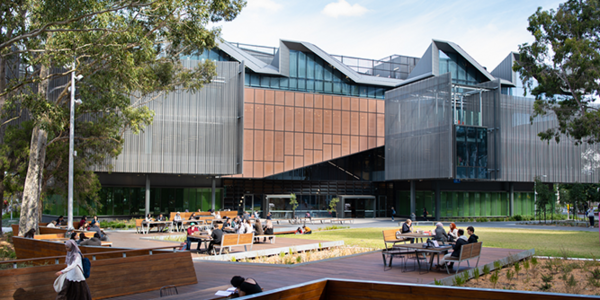
The Summit opened with a tour of the Monash Technology Precinct (MTP). Delegates were welcomed by Monash University Vice-Chancellor and President Professor Sharon Pickering and Victorian Minister for Tourism and Major Events Steve Dimopoulos before visiting the Monash Innovation Labs, the mRNA Workforce Training Centre, the Victorian Heart Hospital and the Australian Synchrotron.
Victoria’s innovation infrastructure is concentrated across four major precincts anchored by Monash University, the University of Melbourne, RMIT University and La Trobe University. At the heart of this network sits the MTP, a district that supports 115,000 jobs, contributes up to $11.5 billion to the Victorian economy each year, and provides training for tens of thousands of students. Over the past five years alone, Monash-generated intellectual property has resulted in 33 spinouts, 169 licensing deals and $1.55 billion in capital raised.
Monash’s influence stretches to significant footprints in the Parkville Precinct, the Alfred campus and the Peninsula Health Precinct, as well as a statewide presence through the School of Rural Health, which spans Mildura to Bairnsdale.
Professor Pickering said Melbourne’s health precincts, particularly the MTP, are pivotal to national research and industry performance. “Melbourne’s health precincts, such as the Monash Technology Precinct, are vital engines of innovation and economic growth,” she said. “Not only do they drive advances in medical research and patient care, they also create high-skill jobs, attract global investment and strengthen Australia’s reputation as a leader in health and biomedical innovation.”
She highlighted Monash University’s investment in MAVERIC, an advanced AI supercomputer, as a transformative step that will accelerate research, strengthen collaboration and deepen ties with global partners, including the University’s new Monash Boston Hub in the US. “By embedding AI expertise within the Precinct, we’re enabling faster data analysis, stronger trial design and more effective collaboration with global partners,” she said.
Monash University’s Director of Precincts, Mariella Smids, said the Summit demonstrates how Victoria’s innovation precincts operate as interconnected ecosystems. “We’re demonstrating how researchers, clinicians, industry and government share infrastructure, talent and capability to move new ideas into clinics and communities faster,” she said. “This coordinated approach reinforces Victoria as a globally competitive destination for research, health, industry and investment.”
That integration is already delivering impact, said Professor Stephen Nicholls, Director of the Victorian Heart Institute, Victorian Heart Hospital and the Velos research accelerator. He noted that while Australia excels in research, the challenge has long been in translating that strength into real-world outcomes. “Precincts like this create the environment to think differently, work differently and ultimately deliver better outcomes for the community,” he said. “The MTP ecosystem sharpens the questions we ask in research, brings industry, government and regulators into the development process, and ensures our clinical decisions are guided by the latest evidence and innovation."