Australian company Vaxxas has been selected as part of an international consortium to help strengthen Europe’s preparedness for future seasonal and pandemic influenza threats, securing a place in a competitive European Union tender that could unlock up to $250 million in development funding.
The Brisbane-headquartered firm is working alongside South Korea’s SK Bioscience and Germany-based IDT Biologika under a contract awarded by the European Health and Digital Executive Agency acting on behalf of the Health Emergency Preparedness and Response Authority. The initiative falls within the European Union’s 2024 EU4Health Work Programme and is designed to accelerate the development of next-generation influenza vaccines that respond more effectively to cross-border health emergencies.
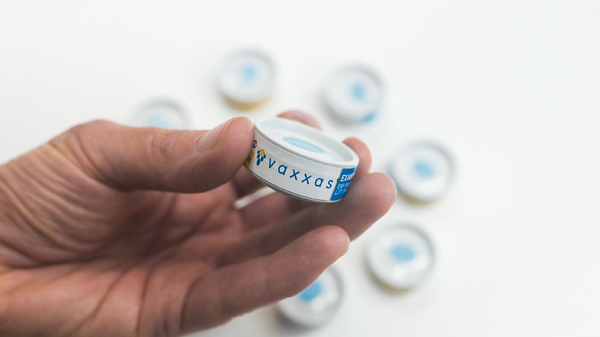
The award recognises the potential of alternative vaccine delivery technologies, particularly those that simplify administration and can be deployed rapidly in crisis situations. Central to the consortium’s proposal is Vaxxas’ proprietary high-density microarray patch, known as HD-MAP, a needle-free platform designed to enhance vaccine performance while reducing logistical constraints.
Under phase one of the program, the consortium has secured €12.9 million (approximately $22 million) to advance a seasonal influenza vaccine candidate combining SK Bioscience’s antigen technology with Vaxxas’ HD-MAP delivery system. The funding will support a Phase 1 clinical trial and preclinical work to develop a clinic-ready HD-MAP for pre-pandemic influenza strains. The broader program spans three sequential competitive phases, with up to A$250 million in total available funding to carry successful candidates through late-stage clinical trials, product registration, and ultimately into the European market.
Vaxxas Chief Executive Officer David Peacock described the award as validation of a shared ambition between the consortium and European authorities to invest in technologies that streamline vaccination and enhance public health preparedness. He said the tender positions the partners at the forefront of global vaccination innovation and reflects growing recognition by governments of the role alternative delivery systems can play in strengthening pandemic response.
The European contract builds on momentum already underway for Vaxxas in the United States. Backed by the Biomedical Advanced Research and Development Authority, the company is completing its largest Phase 1 clinical study to date of HD-MAP technology paired with a pre-pandemic influenza vaccine. That trial involves more than 250 participants across multiple clinical sites.
Previously published research has demonstrated that influenza vaccines delivered via the HD-MAP platform can remain stable at 40 degrees Celsius for up to 12 months. Such thermostability could significantly reduce reliance on continuous refrigeration, simplifying storage and distribution, particularly in resource-limited or emergency settings.
The consortium’s submission to the European authorities was led by IDT Biologika, which brings more than a century of experience in vaccine development and manufacturing. Co-Chief Executive Officer Dr Sally Choe said the collaboration reflects the company’s commitment to evolving with global health needs by advancing new vaccination approaches designed to improve protection against both seasonal and pandemic influenza.
SK Bioscience will supply vaccine antigens for both seasonal and pandemic studies using its proprietary cell culture technology, including its SKYCellflu platform. President and CEO Jaeyong Ahn said the project underscores how the partners’ combined global network and technological capabilities can translate into competitive performance, particularly as the company continues to pursue opportunities for its proprietary vaccines in Europe.
If the consortium successfully completes phase one, it will be eligible to bid for subsequent phases that support progression into late-stage clinical trials, marketing authorisation applications and the establishment of sovereign European Union manufacturing capacity. The pre-commercial procurement model adopted by the European Commission is intended to stimulate innovation while improving the availability, accessibility and affordability of critical medical countermeasures.