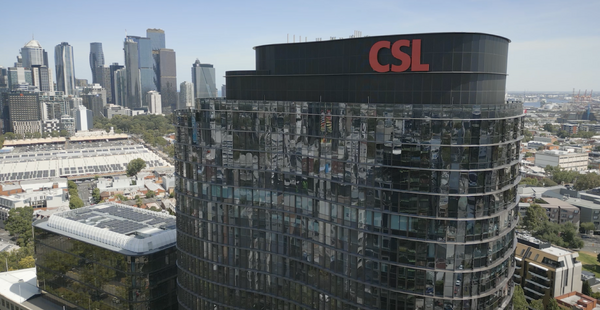
CSL has reported a statutory net loss of US$2.6 billion for the 2026 financial year after booking US$7.1 billion in pre-tax impairments and taking US$799 million in one-off restructuring costs.
The company framed the result as a reset intended to restore sustainable growth. Investors backed the company with its share price rising by more than 15 per cent after the announcement.
Interim chief executive and managing director Gordon Naylor said CSL had taken decisive action during the year to simplify the organisation, strengthen commercial capabilities and position newer therapies for growth.
“FY26 has been a year of reset,” Mr Naylor said. “We have taken decisive action and created a clear path to return to sustainable growth.”
The reported loss was principally driven by impairment charges, including US$5.5 billion recognised in the second half. CSL said the write-downs reflected a weaker commercial outlook for particular assets, expected timing of generic competition, regulatory developments, market conditions and assumptions about manufacturing site utilisation.
CSL Behring, the group’s largest division, generated US$11.4 billion in revenue, down 1 per cent in constant currency. Immunoglobulin sales were flat at US$6.2 billion as the company normalised US channel inventory, absorbed changes to Medicare Part D and cycled prior-year tender losses.
Albumin sales fell 17 per cent to US$1.1 billion following Chinese government cost-containment measures. Haemophilia revenue declined 1 per cent to US$1.5 billion, although the company reported growth in newer products. HEMGENIX sales rose 25 per cent, and IDELVION sales increased 1 per cent, partly offsetting declines in CSL’s legacy factor VIII portfolio.
CSL’s newer hereditary angioedema treatment ANDEMBRY generated US$240 million in its first full year on the market. KCENTRA sales, however, fell 17 per cent amid US pricing pressure.
CSL Vifor delivered revenue growth of 3 per cent to US$2.4 billion, helped by nephrology products but constrained by generic competition in iron and a second-half decline in VELPHORO.
The company expects a more difficult year for the CSL Vifor division in the financial year 2027. Revenue is forecast to decline by about 25 per cent, reflecting generic competition in iron products, and revocation of the marketing authorisation for TAVNEOS.
CSL Seqirus recorded an 8 per cent decline in revenue to US$2 billion, largely because the prior year included non-recurring revenue associated with an avian influenza outbreak. Excluding that comparison effect, the influenza vaccines business grew key products despite softer US vaccination rates.
Global seasonal influenza revenue rose 4 per cent, with FLUAD sales increasing 5 per cent to US$968 million following launches in Germany and France. FLUCELVAX sales also increased 5 per cent to US$503 million, supported by growth in the US paediatric market.
The company said its transformation program had produced approximately US$176 million in savings by the end of financial year 2026, ahead of its target. CSL has reduced fixed infrastructure and integrated commercial and medical-affairs functions across Behring and Vifor, removing duplication and simplifying the business.
CSL is also pursuing a substantial expansion of its US plasma manufacturing footprint, with approximately US$1.5 billion earmarked for investment including the Horizon 2 yield-improvement program. The company said it will seek clinical evidence to support regulatory approval for Horizon 2 after engaging with the US Food and Drug Administration and the European Medicines Agency.
The group has also entered a strategic collaboration with Dutch biotechnology company VarmX on a potential treatment designed to restore blood coagulation.
For the current financial year, CSL said it expects revenue to be broadly in line with 2026 and underlying profit growth of around 5 per cent. CSL Behring is expected to deliver mid-single-digit revenue growth, with immunoglobulin growth in the mid-to-high single digits, while Seqirus is forecast to grow at a low-single-digit rate.
CSL said plasma market fundamentals and demand remained sound, with future growth expected to be supported by plasma-collection efficiency, manufacturing productivity, commercial investment and the rollout of newer therapies.