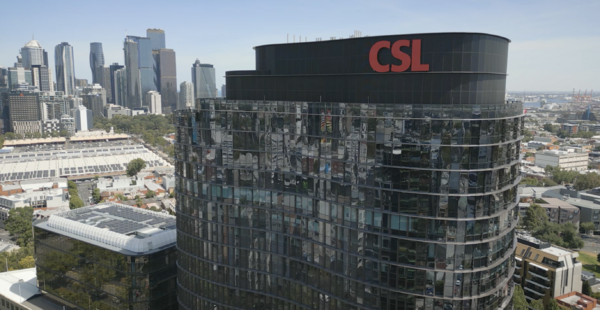
CSL has reported a slip in first-half results for 2026, shaped by policy headwinds, restructuring charges and asset impairments, even as the company accelerates a wide-ranging transformation aimed at restoring growth and long-term value.
For the six months to 31 December 2025, underlying net profit after tax attributable to shareholders (NPATA) fell 7 per cent to US$1.9 billion on a constant currency basis. After one-off restructuring costs and impairments, reported net profit declined to US$401 million. Revenue eased 4 per cent to US$8.3 billion, reflecting regulatory changes in key markets, competitive pressures and the deliberate reshaping of parts of the portfolio.
Management acknowledged that the result fell short of expectations. Chief Financial Officer Ken Lim said performance was adversely affected by government policy changes, particularly in China and the United States, as well as by the financial impact of restructuring and asset write-downs. He said the company had responded by accelerating initiatives to strengthen growth in the second half, driven by immunoglobulin, albumin and newly launched products.
The results announcements followed a leadership transition. CSL announced that Chief Executive Officer and Managing Director Dr Paul McKenzie has retired after seven years in the role. Former CSL executive and current non-executive director Gordon Naylor has been appointed interim CEO and Managing Director, as the Board begins a search for a permanent successor. Chairman Dr Brian McNamee said the decision reflected a shared view that the timing was right for new leadership to guide the company through the next phase of its transformation, while acknowledging Dr McKenzie’s role in stabilising operations through the pandemic and advancing CSL’s product portfolio.
At the centre of CSL’s strategy is a multi-year transformation program focused on organisational simplification, cost efficiency and targeted investment. By the end of the first half, the company said it had achieved around 60 per cent of its targeted 2026 cost savings, driven by lower fixed R&D costs, reduced infrastructure spending and the integration of commercial and medical teams across the group. One-off restructuring costs for 2026 are expected to total US$700–770 million, with annual pre-tax savings of up to US$550 million forecast by 2028.
The company also booked the bulk of significant asset impairments during the period, totalling around US$1.1 billion after tax. These were largely related to intangible assets, reflecting increased generic competition in iron products within CSL Vifor and a reassessment of vaccine technology licensing at CSL Seqirus amid declining COVID-related demand and more stringent regulatory requirements. Additional impairments were recorded against manufacturing assets following the acceleration of CSL’s US plasma expansion program.
Operational performance varied across divisions. CSL Behring, the group’s largest business, reported a 7 per cent decline in revenue, with immunoglobulin sales down year on year but showing sequential improvement. Albumin sales were materially affected by policy changes in China, while haemophilia therapies remained resilient, supported by continued uptake of newer products. CSL Seqirus recorded lower revenue following the absence of non-recurring avian influenza income booked in the prior year, but continued to gain market share in seasonal influenza vaccines. CSL Vifor delivered double-digit revenue growth, led by nephrology, despite ongoing pressure from generic iron products.
Despite the earnings decline, CSL’s balance sheet remains strong. Operating cash flow reached US$1.3 billion, net assets stood at US$20.5 billion, and leverage remained within target ranges. This supported an expansion of the company’s share buy-back program from US$500 million to US$750 million and the declaration of an interim dividend of US$1.30 per share.
Looking ahead, CSL has maintained its full-year 2026 guidance, targeting revenue growth of 2–3 per cent and NPATA growth of 4–7 per cent on a constant currency basis, excluding one-off items.